|
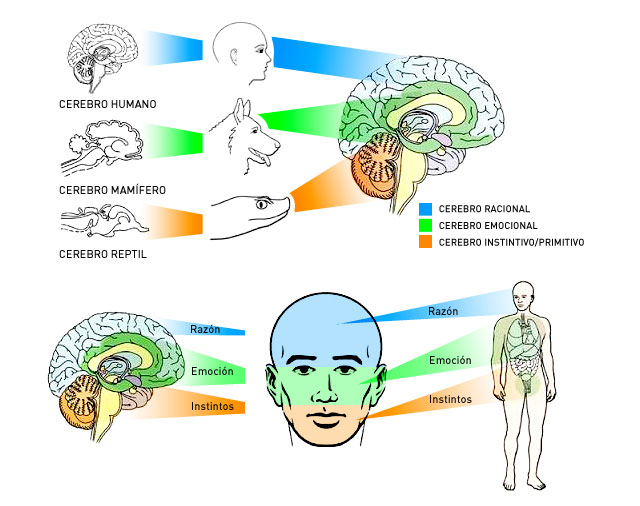
Morphopsychology is a clinical, human science, that studies very precisely, the character, the way of understanding and getting to know people, their attitudes and aptitudes by observing their face and elements which compose it. It’s based on a patient observation study that synthetically covers three fields: biological, physiological and psychological. One must remember that there is no existence without a body, the body expresses our vitality, the body remembers all, it holds the tracks of the past and sometimes promises of the future… Hence, the wounds of the body express an unfinished affliction, an insecure renunciation that allows new projects to be undertaken… Nevertheless, as an oyster that in its wound carries a pearl, the human being, likewise, walks to its salvation. Having said this, the body is not more that an aspect of reality, Morphopsychology is therefore a rich tool but limited, as all instruments are. The first message I’d like to transmit is that Morphopsychology was created by Doctor Corman, children’s psychiatrist, and that the lemma of the SFM, society created to diffuse its knowledge, is “understand and do not judge”. Therefore Morphopsychology is a personal development tool and not an exclusion tool, it will never let out our most intimate secrets. We must rationalize our fears to this discipline. Morphopsychology allows us to comprehend our motivations, place us at a superior level, in a conflict, situate us at a limit level to not communicate with others in a superficial manner. The second message is that the face, which contains nearly all the senses’ organs, has a significance and reveals the performance of the human being and its interchange with the outside world. Body and spirit, physiology and psychology are revived by the same force, from a spiritual point of view, we could say it’s as if though the individual preceded itself , as if though all the information were codified, in an equal quantitative manner, according to a fraction theory. Furthermore, the face allows us to discover our interior self, our hidden talents, the images of the Olympus Gods that encourage us, leading us to an excellent behaviour if we are conscious of this, or on the other hand to repeated downfalls if the desires that motivate us remain in the unconscious. This understanding is helped by the fact that, during our lifetime, elections are repetitive and are dictated by our deep structure. Destiny is not, in fact, more than the form that our desires take. Furthermore, we know through biology that the form of any existence is consequence of the information that revives it. The third message refers to the image we build up of others which proportions us a message. Recent experiences on stress highlight the fact that in front of a stranger we prepare ourselves to attack or escape and that this type of reaction is impressed upon the mind since immemorable times. The face is composed of bones, muscles, nerves and skin. It’s the exit door of our brain, our inwardness, our emotions and our rationalization mechanisms. But how can all this be explained and make sense? We observe five big significant connections, five parts to which we attribute a meaning: Scheme 1: face description: The frame or skeleton tells us about the power of a person (strength in repose); but this strength can be activated or not. The tone, which is like petrol for an engine or electricity for an electric motor, informs us if the strength is connected, if there’s an excess of current, if it’s an adequate current or if it’s disconnected (little electric current). The face modelling, shows us the degree of socialization and adaptation of the individual, his attitude to life, intransigence or adaptation. The senses (eyes, nose and mouth) inform us if we are introverts or extroverts, concentration and observation capacity, and whether we waste strength or control it. Then the face informs us , in its three zones, of what our three brains are like (primitive-instinctive or reptile, emotional or neo-primitive and the modern thinker) and we see which one dominates or if there is a harmony between the three: in these three zones we’ll see the preponderant competences or capabilities and “perfectible” points or less developed.  The Lower zone (mouth, jaw and chin), belongs metaphorically, to the functioning of the reptile nervous system which is united to the centre of the encephalon, the reptile brain connected to the endocrine nervous system, is the centre of the original instincts. Through its receiver it communicates with the digestive and reproductive system which are closely united. Accordingly, in the inferior zone, we find the impulse strength, in other words, the anchor with what’s real and the ambition to perform. The Middle zone is constituted by the facial mass (superior maxillary bone), cheek-bones, and by the width and profoundness of the nose. This zone in mammals, belongs metaphorically to the limbic system growth (around the precedent, the limbic brain, connected to the vegetative system, is the centre of emotions and affections). This zone communicates through its receivers with the respiratory and olfactory system that condition the expression of emotions. The Upper zone is formed by the forehead which is the former part of the skull case. This zone gives us information on mental life.
In this manner, the face is the extract of the body. Its three zones represent the three big biological functions; digestion, respiration and cerebralization, which by predominance, orient us, to three types of temperaments (digestive, respiratory and cerebral) and three forms of intelligence (concrete, relational and abstract).
Nevertheless, it’s not a matter of correlation if not simultaneity of strengths and functions. Summarizing, there is not a simple relation between form and function as we will have to observe if the domination is qualitative or quantitative, depending on the receiver’s modelling and vivacity situated in this zone, as well as the harmony of the three zones.
The morphopsychologist has the capacity to see our natural tendencies and competences, and perfectible points, being a pluridisciplinary science to orientate us towards studies and professions where the person will develop his or her capacities and competences to the maximum, in the field of professional orientation; in the intervention of conflicts, as a tool to detect and orient personality structural problems, relation conflicts farther-son, pre-conjugal advice, problems and conflicts between couples; as a coach, in the evaluation, configuration and cohesion of competitive working teams, in identifying talents inside and outside a company. Being an integral knowledge of the person, it converts into a pluridisciplinary tool to identify the conscious and unconscious of people in this more and more complex world. Equally to diagnose psychopathologies and to observe individuals’ tendencies and orientate them in what must be done to eradicate upheavals caused by their structure or how to improve them.
Until now, Morphopsychology had been questioned, it was said to be little scientific, and it was difficult to submit it to a statistic method, which is true, as I’ve said before, it’s not a mathematical science, but what’s human, fortunately, isn’t mathematical, it’s infinite, and due to this, one must know the rules or elements that motivate it, although the face is not a feature or an addition of features, it’s a composition that interacts synchronically in each one of us with different tinges. In my book “ The face and the personality” 4th. Edition, I show the connection between the brain, the face and conduct.
This negative conception that official and traditional psychology has of Morphopsychology is due to, occidental medicine as well as psychology are inspired by the philosophical principle of “Descartes” , which says that body and soul (body and mind) are different and Morphopsychology is inspired by “Spinoza” philosophy for who body and mind (body and soul) form one singular reality.
It’s not traditional psychology, slightly complex, that is confirming the rules, foundations and empirical studies on Morphopsychology, it’s modern neuroscience and neuroimage which are giving irrefutable conclusions on the Morphopsychology efficacy, which makes it a transcendent tool in the understanding, diagnosis and advice related to what’s human, converting it in an applied pluridisciplinary understanding.
In recent times, people lived without the need of psychology, they got married, had children, and moreover lived according to social conventions. Introducing divorce in our present society has represented an earthquake to which we haven’t valued the effects, all the interior securities have collapsed : a couple now remains together if they wish to.
Consequently, many families separate and the children grow up in structures where equilibrium may be missing. Besides, our period has another characteristic even more peculiar: no more than a century ago it was the parents who chose the school for their children, their profession, their consort, the individual was resigned to be prisoner of the body.
At work, with the new multinational companies and global economy, the traditional “Patron” is disappearing, and with him the security, therefore unstableness appears and fear, as we lose a human reference value with which we can establish a trustful, admiring or fidelity relation, necessary for equilibrium.
We’re living a radical resolution: a part of which price is to get to know oneself better. It deals with an elaboration which considers awareness of weaknesses to be programmed on one side, and the strengths we count upon on the other.
For all these reasons, the understanding of psychology is a fundamental necessity in our times.
You cannot turn an engine on without knowing its mechanisms, for which we cannot follow a direction without understanding our functioning. In this circuit, Morphopsychology is a discipline which allows the “psyche” track to be visible in the individual, and makes the study reachable to all. On the contrary, official psychology can sometimes result abstract.
The chart below explains how to carry out a study. Morphological signs | Psychological signs | Intuitive impression
| What significance does this face have for me? What psychological structures encourage it? What archetypes will have to be integrated to be individualized? |
DominantFrame | Unconscious strength potential Innate needs | Face: wide, extremely extensive | Resistant, full of life, hypersensibility | Face: narrow, extremely withdrawn | Fatigue, life management, hypersensibility | Sthenic , clear angles | Energy reserve, vitality | Asténico, angulos difuminados | Energía débil, receptividad | Profile: projected, lateral withdraw | Dynamism, primary | Profile: erective, frontal withdrawn | Reflection, secondary |
Dynamic Modelled-frame | Preconscious adaptation effort Socialization, maturity | Form: round, extensive | Infancy permeability | Undulated flexible mixed type | Feminine flexibility, maturity | Withdrawn dented, accused mixed type | Masculine tension, maturity |
Flat, Retraction | Ageing defence | Sthenic , tense | Like of challenge | Asthenic, relaxed | Sense of participation | Differentiation | Sense of blending, sensibility, expression of emotion |
Dynamic Frame-receivers | Conscious interchanges | Greatness, lots of interchanges | Avidity or selectivity | Fleshy, sensorial interchanges | Sensorial or cerebrality | Protection, interchange control | Spontaneity or retrocession | Sthenic, interchange rapidity | Affirming or waiting | Differentiation, interchange quality | Fineness or rusticity |
Level dynamism | Motivation of personality basis | Dominant level | Dominant function and behaviour | Inferior | Sensation | Middle | Feelings | Superior | Thought or intuition | Retraction level | Individual evolution function |
Hemiface dynamism | Evolution of expansion, function access rapidity | Right hemiface connected to left brain | Auditive, logical, present | Left hemiface connected to right brain | Visual, intuitive, past |
Profile-face dynamism | | Face | Exterior self, social mask | Profile | Interior self, unconscious soul |
What will be the dominant adaptation problem, life project, search of equilibrium?
Let’s organize the dominant patron type and antagonisms at the level of frame-modelled Frame-receiver, levels and hemifaces to diagnose temperament.AnalysisInferior level | | Neck, jaw | Realization desire | Chin | Affirming desire |
Middle level | | Cheek-bone, cheeks | Socialization desire | Nose | Conquering desire | Lip-nasal space | Tenderness desire |
Superior level | | Skull | Conscious field opening | Forehead | Orientation towards concrete or abstract | Temples, Eyes | Introvert or extrovert orientation |
|